Skip to main contentSkip to footer

Peak Gold: How Much Minable Gold is Actually Left?

Gold History & Curiosities

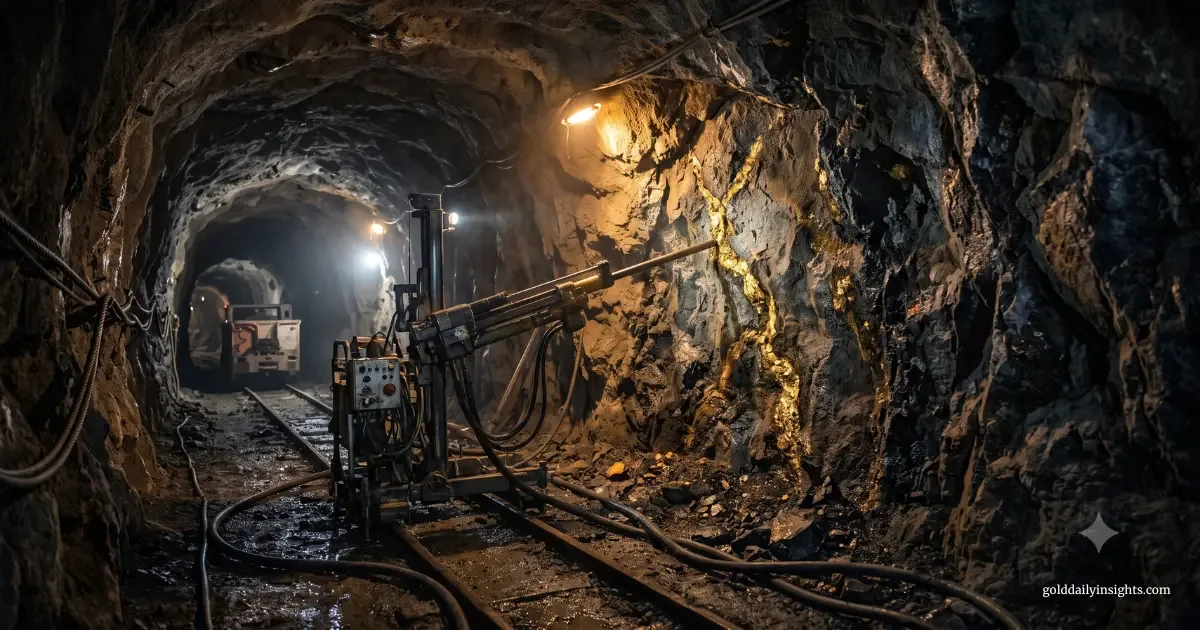
I have just poured my morning coffee and I am sitting in front of my MT5 terminal ahead of the US market open. Instead of tracking bond yields, central bank chatter, or the latest non-farm payrolls for my next short-term setup, I want to step back. Underneath all the daily macroeconomic noise lies a stark, physical reality: the Earth is slowly running out of easily minable gold.

The concept of ‘peak gold’—the point at which the global rate of gold mining reaches its absolute maximum before entering a terminal decline—is not just a dramatic talking point. It is a geological certainty. The question in my mind is no longer if it will happen, but when. Today, I want to break down what the current supply landscape actually looks like and why it matters for anyone trading or holding physical metal.

The Hard Numbers: What is Left Underground?

According to the most recent estimates from the US Geological Survey (USGS), the world’s known, economically viable below-ground reserves sit at roughly 59,000 tonnes. To put that into perspective for my long-term outlook, human beings have mined just over 212,000 tonnes of gold throughout history.

Right now, global mine production pumps out around 3,000 to 3,600 tonnes of gold a year. I do the rough maths on that, and I arrive at a sobering conclusion: at current production rates, the mining industry could exhaust known minable reserves in under two decades.

Now, does this mean gold mining stops entirely in twenty years? No. Mining companies will undoubtedly find new deposits. But finding them is becoming exponentially harder, slower, and drastically more expensive.

The Reality of Diminishing Returns

When I speak to contacts on the exploration side of the mining sector, they all tell me the easy gold is gone. The massive, high-grade surface deposits that built the global mining industry have largely been hollowed out. Today, miners face a severe case of diminishing returns.

First, I am watching the issue of declining ore grades. A few decades ago, mining 10 grams of gold per tonne of earth was standard. Today, the global average ore grade is closer to 1.3 to 1.5 grams per tonne. Miners are quite literally moving mountains of dirt for a handful of gold dust.

Second, digging deeper means soaring capital expenditure. It requires more energy, more water, and vastly more complex engineering. Inflation has also driven up the cost of heavy machinery and skilled labour, squeezing profit margins even when spot prices are trading near all-time highs.

Finally, there is a massive lag time. It now takes an average of 10 to 15 years to take a new discovery from the initial drilling phase to actual commercial production, owing to strict regulatory hurdles and extensive environmental assessments.

Trading the Scarcity: What It Means for XAU/USD

As a trader, how do I price this in? It is crucial to remember that gold does not trade exactly like oil or copper. Because almost all the gold ever mined still exists above ground—sitting in central bank vaults, locked up in ETFs, or worn as jewellery—a sudden drop in mine output will not trigger an overnight supply shock.

However, annual mine supply still accounts for roughly 75 per cent of the total new gold entering the market each year, with the rest coming from recycling. Meanwhile, demand is structurally increasing. Emerging market central banks have been buying gold at a record pace to diversify away from the US dollar, and retail demand in Asia remains incredibly robust.

When a tightening primary supply constraint meets a steady or rising demand curve, it creates a powerful, long-term floor for prices. For my XAU/USD strategy, this structural supply deficit means that downside corrections are likely to find much stronger support levels over the coming years. While my short-term price action will always be knocked around by the US Federal Reserve’s rate decisions, my base case is that the long-term trajectory is fundamentally underpinned by physical scarcity.

The era of abundant, cheap gold mining is behind the market. Holding a hard asset that is genuinely getting harder to pull out of the ground offers a compelling asymmetric edge in a world of endless fiat currency printing.

People Also Ask (FAQs)

What exactly is peak gold?

Peak gold is the specific point in time when global gold production reaches its maximum historical rate. After this peak, the annual amount of gold pulled from the earth will enter a terminal decline. My reading is that the industry is rapidly approaching this threshold, as geological reserves deplete and new discoveries become scarce.

How much gold is actually left in the world to mine?

Based on the latest US Geological Survey data, there are roughly 59,000 tonnes of known, economically viable gold reserves remaining underground. To put that into perspective for my trading, humans have already mined over 212,000 tonnes. The easily accessible surface gold is largely gone.

Why is the gold supply falling today?

When I look at primary supply constraints today, it comes down to geology and economics. Miners face declining ore grades, meaning they move far more dirt for less gold. Combined with soaring energy costs and strict environmental regulations, it takes much longer to bring any new supply to the market.

Will the world run out of minable gold soon?

At current production rates of around 3,000 to 3,600 tonnes a year, the known reserves could be exhausted in roughly 15 to 20 years. I do not expect mining to stop entirely, but new extraction will require vastly higher gold prices to justify the massive capital expenditure involved.

How does falling mine supply affect my XAU/USD forecast?

Because almost all mined gold still exists above ground, a drop in mine output does not create an overnight shock. However, my base case is that tightening primary supply creates a massive structural floor for prices. Over the long term, physical scarcity supports a much higher valuation for XAU/USD.

Can mining companies extract gold from the ocean?

I occasionally see headlines about oceans containing millions of tonnes of gold. While true, the gold is dissolved in microscopic concentrations. Currently, there is no economically viable technology to extract it at scale. I certainly do not factor ocean extraction into any of my supply forecasts.

Why is gold mining becoming so expensive?

I track capital expenditure in the mining sector, and the costs are soaring. Miners have to dig much deeper to find viable veins, which requires enormous amounts of energy, water, and complex engineering. Inflation has also driven up the cost of the heavy machinery and skilled labour required.

Does recycled gold impact the XAU/USD price today?

Absolutely. Annual mine supply only accounts for about 75 per cent of the new gold entering the market. The rest comes from recycling, mostly scrap jewellery. When I see XAU/USD hitting all-time highs, I always watch for a spike in scrap supply, as retail holders cash in their physical metal.

Are central banks buying enough gold to cause a shortage?

Central bank purchasing is a massive driver for my long-term bullish bias. Emerging market institutions are buying at record paces to diversify away from the US dollar. When this aggressive institutional demand meets the constrained mine supply I mentioned earlier, it creates a structural deficit that keeps prices supported.

Is gold a good long-term hold given these supply constraints?

I treat trading and long-term holding differently. For my day trades on MT5, I trade the technicals. But for a long-term portfolio, holding a hard asset that is becoming physically harder to pull out of the ground offers a compelling asymmetric edge against endless fiat currency printing. Scarcity matters.

Tags: Gold Facts, Gold History, Gold Mining Reserves, Gold Supply Deficit, Peak Gold

Leave a Reply

Your email address will not be published. Required fields are marked *

Fill out this field
Fill out this field
Please enter a valid email address.
You need to agree with the terms to proceed

Must Read

Market Analysis #2: Gold Holds $4400 Pre-CPI | 12 Aug 2026
Market Analysis #1: Gold Tests $4365 Support | 11 Aug 2026

Author

I am an IT infrastructure specialist and an active spot gold trader. My approach to the markets is grounded in XAU/USD price action, trading key technical levels around the daily open on MetaTrader 5. While I do not keep active social media profiles, I regularly share my daily market breakdowns on YouTube. For direct enquiries, you can reach me by email.

Latest Articles

Market Analysis

Market Mechanics

History & Curiosities

Trader’s Desk

Gold Trading Tools

No results found.