The Anatomy of the Morning Shift
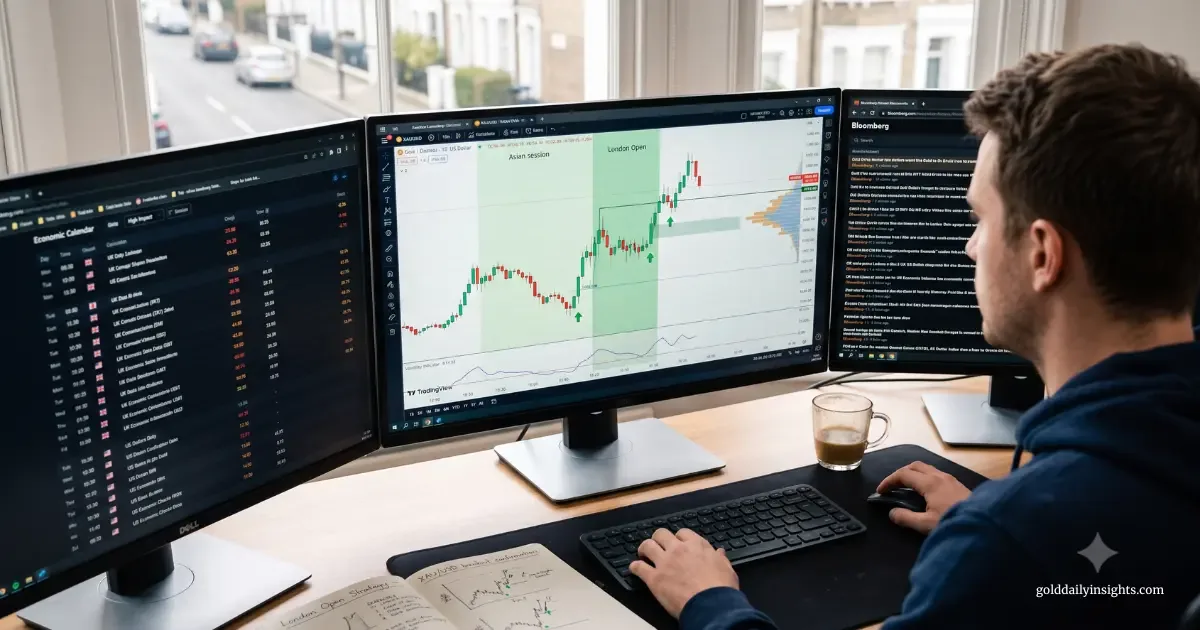
Whenever I sit down with my morning coffee, firing up my MetaTrader 5, the first thing I analyse is the Asian session range. The transition from the quiet Asian trading hours to the frantic London open is, in my experience, one of the most critical windows for XAU/USD day traders. I call this period the Asian handover, and it is precisely when market sentiment often shifts dramatically.
During the Asian session, gold typically moves in a tight, consolidated range with lower volume. But as the clock ticks towards 08:00 BST and European institutional money hits the market, the dynamics change entirely. I always watch for the sudden volume spikes that occur as overnight orders are cleared and new positions are taken for the day.
Trading the Liquidity Sweep
My trading approach during these hours relies heavily on identifying a ‘liquidity sweep’. Often, I observe a sudden, sharp price movement that takes out the overnight Asian highs or lows. To me, this looks exactly like institutional players hunting for stop-loss orders to build their liquidity before driving the real trend of the day.
I usually monitor the M30 timeframe to see how the price behaves around these critical levels. If my charts show gold breaking the Asian high but failing to sustain the momentum, closing back inside the range as a rejection candle, my reading is that it was a fakeout. Conversely, a strong M30 close outside the range gives me a bullish or bearish bias for the rest of the morning.
My Approach to Morning Volatility
My golden rule for the London open is simple: patience. I never place a trade on the exact 08:00 BST minute. The initial price action is often erratic, so I prefer to wait 15 to 30 minutes to let the early dust settle.
By letting the market show its hand first, I can look for a retest of the broken levels rather than chasing the initial, highly volatile impulse. It keeps my risk managed and prevents me from getting chopped up in the morning noise.

Frequently Asked Questions About the London Open
What time does the London open happen for XAU/USD?
The London forex and commodities market officially opens at 08:00 BST. However, in my daily routine, I start monitoring my charts around 07:00 BST. I often notice pre-market institutional volume stepping in during that hour, which gives me early clues about the morning’s intended direction.
Why is gold so volatile during the London open?
London remains the largest financial hub for physical bullion and spot gold trading. When the market opens, a massive amount of European capital flows in. I see this volatility as the market adjusting positions based on overnight news from Asia and preparing for the European trading day.
What is the Asian session range in gold trading?
The Asian session range is simply the highest and lowest price points gold reached during the Asian trading hours. I mark these levels on my charts every morning because they act as magnetic zones for liquidity, often serving as my primary support and resistance levels for the early European session.
How do I trade the Asian handover in XAU/USD?
I trade the handover by waiting for the price to interact with the Asian high or low. My strategy involves watching for a breakout or a rejection at these levels. I rely heavily on price action on my M30 charts rather than rushing into trades before the trend is established.
What is a liquidity sweep in gold trading?
In my trading, I define a liquidity sweep as a rapid, aggressive price move beyond a known support or resistance level, designed to trigger retail stop-losses. Once those stops are hit, the price often reverses sharply. I actively watch for these sweeps during the London open to avoid getting trapped.
Does the US Dollar affect the London open gold price?
Absolutely. Because gold is priced in US Dollars, any early morning movements in the Dollar Index (DXY) during the European session directly impact XAU/USD. I always keep one eye on the dollar’s performance when forming my gold bias for the morning.
Which timeframe is best for trading the London open?
Whilst many scalpers use the 1-minute or 5-minute charts, I personally prefer executing and managing my trades on the M30 timeframe. It filters out a lot of the initial 08:00 BST noise and gives me a much clearer picture of the true market sentiment without the erratic spikes.
Should I place trades before 08:00 BST?
I avoid entering new positions just before the bell. The spreads can widen, and the price action is incredibly unpredictable. My preference is to wait for the London volume to hit the market and establish a clear direction before committing my capital to a trade.
How do I identify a fakeout at the London open?
I identify a fakeout by watching the candle closes. If the price spikes above the Asian high but immediately pulls back and closes the M30 candle below that level, I view it as a failed breakout. This rejection usually signals to me that the market is preparing to reverse.
Is the London session the best time to day trade gold?
For my personal trading style, yes. The overlap between the end of the Asian session and the start of the London session provides the perfect mix of high volume and volatility. I find it much easier to catch clean, directional moves during these morning hours compared to the quieter periods of the day.