Navigating the Danger Zones of XAU/USD
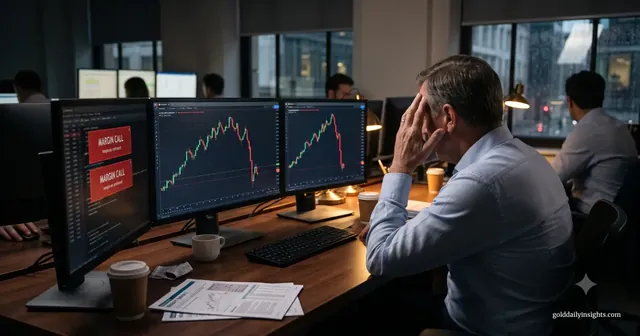
I remember sitting at my desk with a coffee, watching a quiet Asian session on my MetaTrader 5 terminal. The XAU/USD chart was barely moving, lulling me into a false sense of security. Then, in the space of a single minute, the candles blurred. Gold plummeted $30, triggering my stop-loss with severe slippage, before snapping right back up to its original price. I was left staring at the screen, wondering what on earth had just happened.
Welcome to the reality of flash crashes. In today’s high-frequency trading era, the gold market is a battleground heavily influenced by institutional algorithms. My experience tells me that whenever I leave the heavy volume of the London or New York sessions, I am stepping into a potential danger zone.
The Mechanics of a Sudden Spike
A flash crash in gold almost always requires one specific ingredient: low liquidity. I pay close attention to bank holidays, the rollover period between the US close and the Tokyo open, and the anxious minutes just before major economic data drops. During these times, the order book thins out dramatically, meaning there are very few pending orders waiting to be executed.
If a massive institutional order hits the market under these conditions—perhaps an algorithmic error or a classic human “fat finger” mistake typing an extra zero—it tears through the available liquidity like a wrecking ball. Because there are no buyers to absorb the sudden wave of selling, the price falls into a void. HFT algorithms immediately detect this violent momentum, triggering a cascade of automated selling that specifically targets and triggers retail stop-losses.
To me, the market shows its true, unforgiving nature during these events. The algorithms do not care about the technical support levels I have drawn on my M30 chart; they simply follow the path of least resistance until the order imbalance is resolved.
Defending My Capital
I cannot predict when a flash crash will occur, but I can control how exposed my account is to these black swan events. My primary defence mechanism is avoiding the market when it is most vulnerable. If there is a major bank holiday in both the US and the UK, I simply step away from my workstation. The potential reward simply does not justify the exposure to random algorithmic spikes.
When I do decide to trade during thinner sessions, I apply a strict rule: I size down my positions. By risking less capital per trade, I can afford to place my stop-loss slightly wider. This gives my trade room to breathe and helps me avoid getting stopped out by artificial liquidity sweeps before the market resumes its natural trend. It is all about capital preservation so I can stay in the game to trade another day.
People Also Ask (FAQs)
What causes a flash crash in gold?
A flash crash in gold typically happens when market liquidity dries up. If a large institutional order hits the order book during a quiet session, or a ‘fat finger’ error occurs, there simply are not enough buyers or sellers to absorb it. Algorithms then kick in, triggering stop-losses and causing a rapid, severe price drop or spike before I even have time to react.
Why is gold falling so fast today?
When I see XAU/USD plummeting without an obvious news catalyst, I immediately check liquidity and algorithmic flows. Often, it is a cascading effect where algorithmic trading systems trigger a chain reaction of sell orders. If a major support level breaks, retail stop-losses are executed automatically, which accelerates the downward momentum violently.
Can you predict a flash crash in XAU/USD?
Honestly, I cannot predict the exact moment a flash crash will occur. By their very nature, they are sudden and unexpected anomalies. However, I can identify the conditions that make them more likely, such as trading during bank holidays, the thin Asian session, or right before a major economic release when institutional players pull their orders.
How do algorithmic traders affect the gold price?
High-frequency trading algorithms account for a massive volume in the gold market today. I have noticed that they do not care about human technical analysis. When they detect a sudden price imbalance or a large order, they execute thousands of trades in milliseconds. This can turn a minor dip into a full-blown flash crash before human traders even blink.
What is a fat finger trade in gold?
A ‘fat finger’ trade is simply human error. It happens when an institutional trader accidentally types an extra zero on a massive order or hits sell instead of buy. While it sounds ridiculous, I have seen these mistakes wipe out the entire order book on XAU/USD for a few seconds, causing extreme price distortion before the market corrects itself.
Does a stop-loss protect me during a market crash?
My experience is that a standard stop-loss might not save you during a true flash crash. When liquidity vanishes and prices gap, my broker might suffer from ‘slippage’. This means my stop-loss is triggered, but the actual execution happens at the next available price, which could be dollars away from my intended exit point, resulting in a larger loss.
Why is gold trading so volatile at night?
For me, the night usually refers to the Asian session or the crossover between the US close and the Tokyo open. During these hours, the big banks in London and New York are closed, meaning the overall trading volume is much lower. With fewer orders sitting in the market, even a moderate trade size can push the price around significantly.
Should I buy gold after a flash crash?
I never try to catch a falling knife. While it is tempting to buy a sudden dip, my rule is to wait for the dust to settle. I look for price action to stabilise on my charts and wait for a clear structure to form. Sometimes a flash crash is just an algorithmic anomaly, but buying blindly is pure gambling.
What time is liquidity lowest for XAU/USD?
In my daily routine, I see the lowest liquidity during the late US session roll-over and the early Asian session. Bank holidays in the US or UK also severely deplete market depth. I actively reduce my position sizes or avoid trading altogether during these windows, as the risk of erratic, algorithmic price spikes is simply too high.
How long does gold take to recover from a flash crash?
There is no set timetable. Sometimes, I watch the price snap back to its original level within ten minutes as algorithms realise the move was an error or an overreaction. Other times, the crash breaks major technical structures, and the market sentiment shifts entirely, taking days or weeks to recover. I always trade what the chart shows me next.