The Crypto Pitch vs The XAU/USD Reality
Sitting here with my morning coffee, staring at the XAU/USD chart on my MetaTrader 5 terminal, I often think about the endless noise surrounding digital assets. Every time cryptocurrency rallies, a new wave of commentators stares into a camera to declare that Bitcoin is the “new gold”. It is an alluring narrative, especially for those seeking quick gains. But as a trader who spends hours analysing price action and market history, I see a very clear distinction between speculative tech enthusiasm and a genuine, multi-generational store of value.
I am not here to dismiss the underlying blockchain technology, which is undeniably clever. However, when I look for stability to anchor my capital or evaluate safe-haven flows during a true market shock, my reading is that thousands of years of tangible trust will always outweigh intricate lines of computer code.
The Tangibility Gap
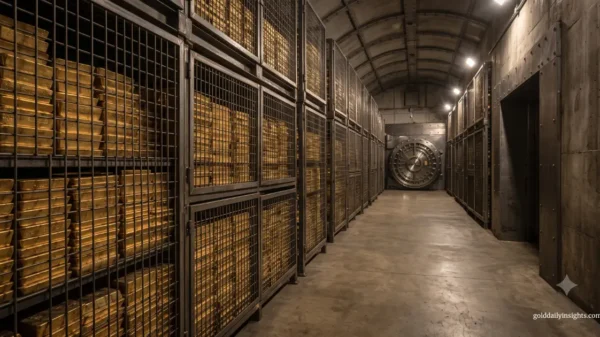
The most fundamental difference is one that I feel gets ignored when risk appetite is high: tangibility. Gold is a physical element. It occupies space, you can hold it in your hand, and it cannot be hacked. It requires no internet connection, no server farm, and no power grid to maintain its existence.
When I hold a physical gold coin, I know I possess an asset that has survived the rise and fall of countless empires and fiat currencies. Cryptocurrencies, by contrast, rely entirely on a functioning global digital network. They lack the physical finality that gives the yellow metal its undisputed status as the world’s ultimate safe-haven asset.
Trust: Centuries vs Market Cycles
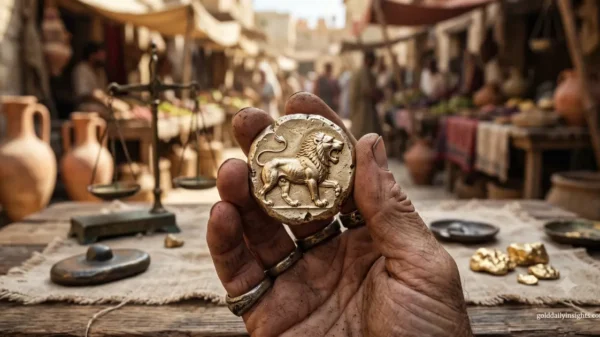
Trust in gold is not built on a recent whitepaper; it is cemented by five millennia of human history. When global markets experience a genuine panic—the kind that wipes out liquidity and triggers mass uncertainty—I watch the flight to safety invariably land on gold.
I see this constantly playing out on my charts. Whenever geopolitical tensions spike or central bank policies create intense inflationary fears, gold acts as the benchmark for stability. Crypto assets, so far, tend to trade much more like high-beta technology stocks. When fear strikes and margin calls hit, I notice investors frequently dump their riskier digital holdings for liquidity, whereas gold is consistently bought as the ultimate hedge.
The Reality of Utility
Crypto proponents often point out that Bitcoin has a capped supply, making it scarce. That is true, but scarcity on its own does not automatically equal enduring value. Gold has deep-seated cultural significance, aesthetic appeal, and actual industrial utility that transcends pure investment.
It is used in electronics, dentistry, medicine, and fine jewellery. Even if its appeal to financial speculators were to vanish tomorrow, the physical metal would still possess inherent, real-world demand. I cannot say the same for a purely digital token. When the screens go dark, gold remains exactly what it has always been.
Frequently Asked Questions About Gold Today
Is Bitcoin considered digital gold?
I hear this comparison often, but I do not agree with it. Bitcoin has a limited supply, which mimics one aspect of gold, but it completely lacks physical existence and millennia of historical trust. To my mind, it is a speculative tech asset, not a genuine replacement for the yellow metal.
Why does the gold price rise during global panics?
Whenever I watch my charts during geopolitical tensions or economic uncertainty, I see capital flowing into gold. Investors have trusted the physical metal for thousands of years to preserve wealth when fiat currencies and riskier assets falter. It is a psychological anchor during genuine market panic.
Can cryptocurrency replace physical gold as a safe haven?
My base case is no. While digital assets offer high volatility for speculation, they tend to crash alongside equity markets when real fear hits. Gold has a proven track record of holding its ground or rallying during major crises, making it the superior safe haven.
Does physical gold still have real-world utility?
Absolutely. Beyond being a financial hedge, gold is highly conductive, resistant to corrosion, and essential in manufacturing modern electronics, medical devices, and aerospace components. This physical demand provides an intrinsic value floor that digital tokens simply do not have.
Is Bitcoin a better inflation hedge than gold?
I am highly sceptical of this claim. Gold has proven its ability to preserve purchasing power over centuries of inflationary cycles. Cryptocurrency is barely a decade and a half old, and its recent history shows it behaves more like a risk-on asset than a stable inflation hedge.
What happens to digital assets in a major grid failure?
This is a major concern of mine regarding digital wealth. If internet infrastructure or power grids suffer catastrophic failures, cryptocurrencies become inaccessible. Physical gold requires no electricity or network connectivity to retain its value or be exchanged in an emergency.
Why do central banks hold gold reserves instead of crypto?
Central banks seek absolute stability, liquidity, and zero counterparty risk for their reserves. I watch institutions continuously accumulate gold because it is a universally recognised physical asset that cannot be devalued by another nation’s monetary policy or wiped out by a cyber attack.
Is trading gold better than trading cryptocurrency?
For my style of trading, yes. I prefer trading XAU/USD because it responds logically to macroeconomic data, yields, and the US Dollar. The liquidity is massive, and the technical levels on my MT5 charts are generally respected, unlike the erratic, sentiment-driven swings common in crypto.
Will gold ever lose its value to digital currencies?
I consider the probability of this to be near zero. Human psychology is deeply wired to value tangible, beautiful, and indestructible items. While digital currencies will likely evolve and find their permanent place in finance, they cannot replicate the physical permanence of the yellow metal.
Why do I prefer physical gold over digital tokens?
Because physical gold represents financial sovereignty that is not dependent on a third-party network. When I look at the long-term charts and financial history, I trust the asset that has survived every currency collapse in recorded history over lines of code that rely on modern infrastructure.