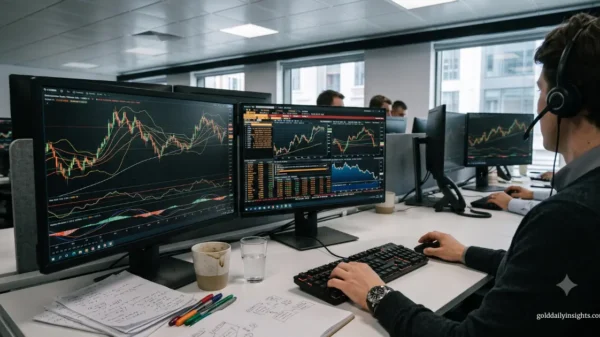
Sitting here with my morning coffee, staring at the XAU/USD chart on my MetaTrader 5 before the New York open, I often think about the invisible forces driving this market. If you have spent any time tracking gold, you have probably noticed something peculiar. I can be watching the price consolidate quietly for hours, and then—out of nowhere—it drops $15 in a matter of seconds. No major news broke on the economic calendar. No central bank governor gave a surprise speech. So, what actually happened?
To understand these violent intraday swings, I need to talk to you about the whales. I am not referring to retail day traders panic-selling their micro-lots. I am talking about the massive, opaque institutions that actually dictate the spot price of gold: the LBMA in London and COMEX in New York.
Most traders treat these names as abstract financial jargon. But if you want to trade gold seriously, and especially if you trade the daily session opens like I do, you need to know exactly who is sitting on the other side of your screen.
The London Bullion Market Association (LBMA): The OTC Giant
When you hear the word ‘exchange’, you probably picture a centralised electronic order book. The LBMA does not work like that at all. It is an Over-The-Counter (OTC) market, which means trades happen privately between a network of massive bullion banks.
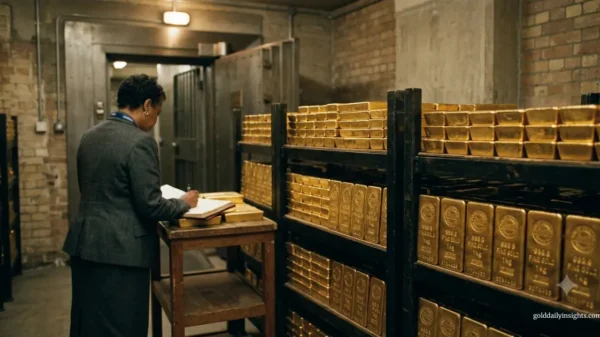
This market is the undisputed centre of physical gold trading globally. The vaults in London hold thousands of tonnes of gold. When a central bank or a sovereign wealth fund wants to buy a few tonnes of physical metal, they do it here, trading ‘Loco London’ (meaning the gold physically sits in London vaults).
Because it is OTC, the LBMA is notoriously opaque. I cannot just log into my trading platform and see their order book. Retail traders only get aggregated data delayed by quite a bit. Twice a day, they hold an electronic auction to determine the ‘LBMA Gold Price’. This benchmark is what mining companies, central banks, and jewellers around the world use to price their physical contracts.
COMEX: The Futures Behemoth
If London is the home of physical gold, New York is the undisputed king of ‘paper gold’. Run by the CME Group, COMEX is where futures contracts are traded.
Think of it this way: the LBMA is where you go when you want a physical bar delivered to your vault. COMEX is where hedge funds, speculators, and miners go to bet on the future price of gold, or to hedge their existing physical exposure.
Here is the catch—and the reason COMEX has so much leverage over the spot price: the vast majority of trades on COMEX are never settled in physical metal. They are settled in cash. A large institutional trader buys a contract representing 100 ounces of gold, rides the price up or down, and then sells the contract before the delivery date.
Paper Gold vs. Physical Delivery: The Great Disconnect
This brings me to the leverage these institutions hold over XAU/USD. On COMEX, the ratio of paper gold to physical registered gold sitting in the warehouses is often staggering. Institutional players can trade billions of dollars in gold contracts using margin, creating massive artificial supply or demand.
When a large hedge fund dumps a massive block of futures contracts onto the COMEX market during a period of low liquidity—say, just before the London session open—it causes the spot price to plummet. They are not selling physical gold; they are selling a promise. Yet, the spot price reacts instantly, because arbitrage algorithms link the COMEX futures price directly to the London spot price I see on my charts.
Who Really Pulls the Strings on XAU/USD?
So, who is actually in charge? In my experience analysing these markets, it is a symbiotic relationship. London has the physical metal, but New York provides the liquidity and the price discovery.
In today’s market, my reading is that we are witnessing a fascinating shift. Central banks are accumulating physical gold at record rates directly through OTC markets like the LBMA. Meanwhile, Western institutions occasionally dump paper contracts on COMEX based on their interest rate expectations. This creates a tug-of-war. The physical buyers provide a solid floor for XAU/USD, whilst the paper traders create the intraday volatility I look for when scalping.
Next time you see a sudden, aggressive spike on your chart, remember what is happening behind the curtain. It is not retail sentiment shifting. It is a bullion bank hedging an enormous physical order in London, or a hedge fund unwinding a leveraged futures position in New York. Respect the whales, trade alongside their liquidity, and I guarantee the gold market will make a lot more sense to you.
Frequently Asked Questions About Gold Today
What is the difference between LBMA and COMEX?
In my trading experience, the easiest way to understand this is that the LBMA in London is a physical, over-the-counter market where massive institutions trade actual gold bullion. COMEX in New York is a futures exchange where participants trade ‘paper’ contracts based on the future price of gold, usually settling in cash.
Does COMEX manipulate the gold price today?
I often see large institutional orders cause sudden movements in XAU/USD. Because COMEX allows traders to use high leverage to trade paper gold, whales can push prices around during times of low liquidity. While heavily regulated, the sheer volume of these contracts undoubtedly impacts the spot price I see on my screen.
Who controls the gold price?
No single entity controls the price, but I always watch the major players on the LBMA and COMEX. Central banks buying physical metal in London provide a long-term price floor, while hedge funds trading paper futures in New York create the short-term volatility and liquidity that I trade every day.
What does LBMA Good Delivery mean?
It is a strict set of standards set by the LBMA that dictates the physical characteristics of gold bars used in London settlement. For a bar to be ‘Good Delivery’, it must weigh around 400 troy ounces and meet extremely high purity standards of at least 995.0 parts per thousand.
Can you demand physical gold from a COMEX contract?
Yes, it is technically possible for a trader to take physical delivery by holding a contract to expiry. However, in my observation, over 95% of traders roll over or close their positions for cash before this happens. They are speculating on the XAU/USD price, not looking to store physical metal.
Why is gold falling today when there is no news?
When I see a sudden drop with no economic catalyst, it is often a large hedge fund dumping a massive block of futures contracts on COMEX. They sell a paper promise, but arbitrage algorithms instantly link that futures price drop to the London spot market, causing the XAU/USD chart to plummet.
Is paper gold dragging down the physical price?
It can certainly happen in the short term. I frequently notice that aggressive selling of paper contracts on COMEX depresses the spot price, even when physical demand remains strong. However, over a longer timeframe, persistent physical buying usually overwhelms the paper short positions, forcing prices back up.
How do I trade around institutional gold whales?
My approach is never to fight the whales. I use tools like daily high and low markings on my MetaTrader 5 and wait for the market session openings. By watching how price reacts at key liquidity zones, I aim to ride the momentum created by these massive institutional orders rather than predicting them.
What time do the gold markets open in London and New York?
I always keep a close eye on 8:00 AM London time and 8:00 AM New York time. These session opens bring a massive influx of liquidity from the LBMA and COMEX participants. The overlapping hours between London and New York usually provide the most trading volume and the best setups for my strategies.
Why do central banks buy physical gold instead of paper gold?
Central banks accumulate physical gold through OTC markets like the LBMA because they want tangible assets with no counterparty risk. Paper gold is just a financial contract. In my view, central banks are securing actual wealth to diversify their reserves, which provides a strong, underlying bid for the physical market.